Protease for Fish Sauce Fermentation | SaltPulse Bioworks
Compare protease options for fish sauce tanks. SaltPulse Bioworks helps fermentation teams improve nitrogen release, aroma maturity, salt tolerance, and batch consistency.
Request pricing Compare protease options for fish sauce tanks. SaltPulse Bioworks helps fermentation teams improve nitrogen release, aroma maturity, salt tolerance, and batch consistency.
Request pricingSaltPulse Bioworks supports fish sauce factories that want faster, steadier protein breakdown without losing the character of traditional long-salt fermentation. If you are comparing protease options for tanks of salted anchovy, mixed fish, or regional raw material blends, the right question is not simply which enzyme works. The real question is which protease behaves reliably in your brine, your temperature profile, your tank geometry, and your target aroma curve.
As an enzyme supplier for fish sauce fermentation, SaltPulse Bioworks focuses on plant-scale outcomes: soluble nitrogen release, controlled umami development, smoother maturation, improved batch-to-batch consistency, and fewer surprises when production moves from trial drums to commercial vats.
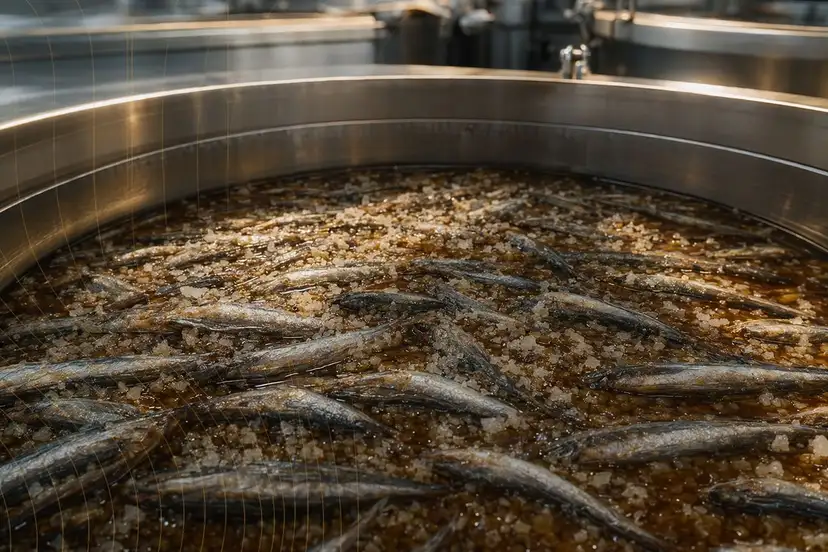
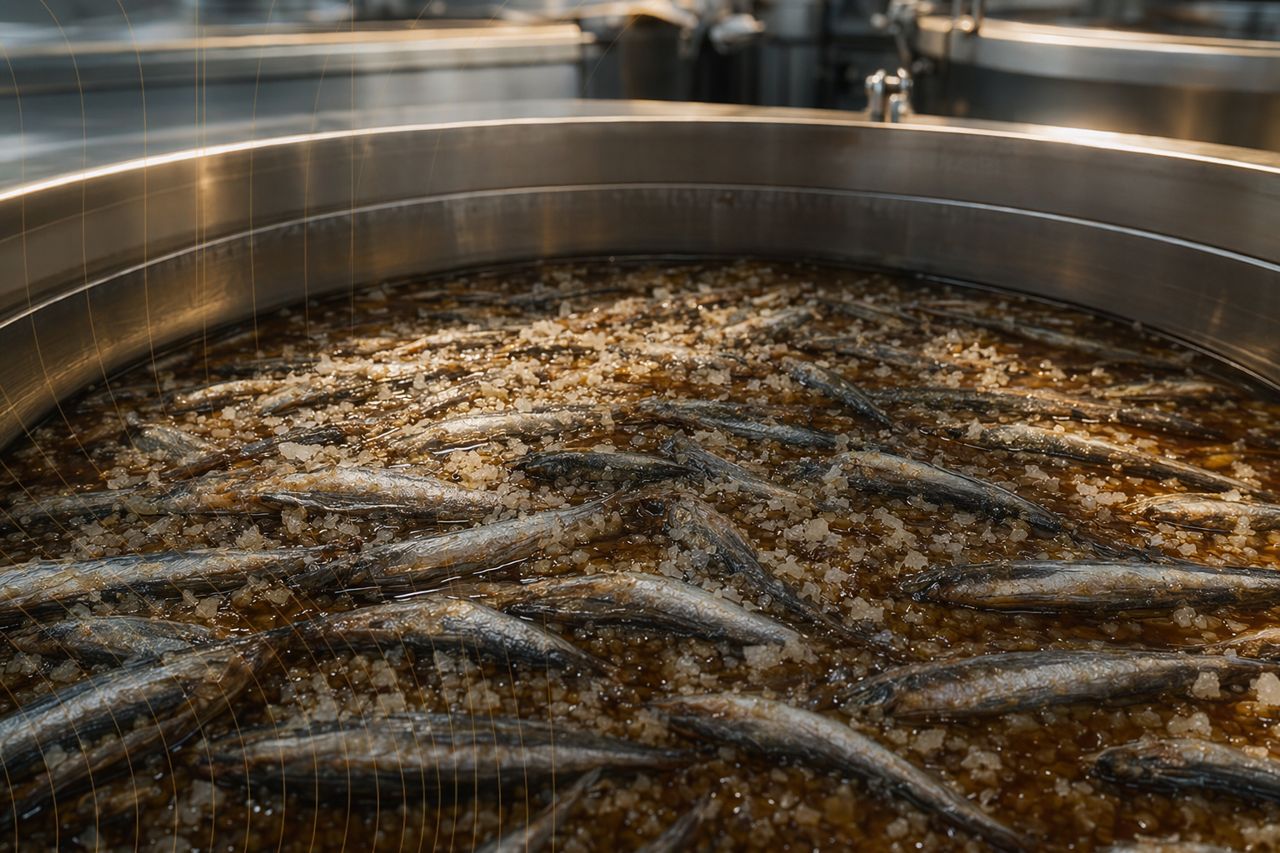
Fish sauce is not a generic protein hydrolysate. It is a high-salt, time-dependent fermentation where fish substrate, brine strength, microbial ecology, temperature, tank turnover, and aging philosophy all influence the finished sauce.
A poorly matched protease can push hydrolysis too fast at the surface, underperform in concentrated brine, create uneven nitrogen release, or expose harsh notes before aroma maturity catches up. A well-matched protease supports the craft already present in the factory: cleaner extraction, more predictable maturation, and a better-controlled path from raw fish to amber sauce.
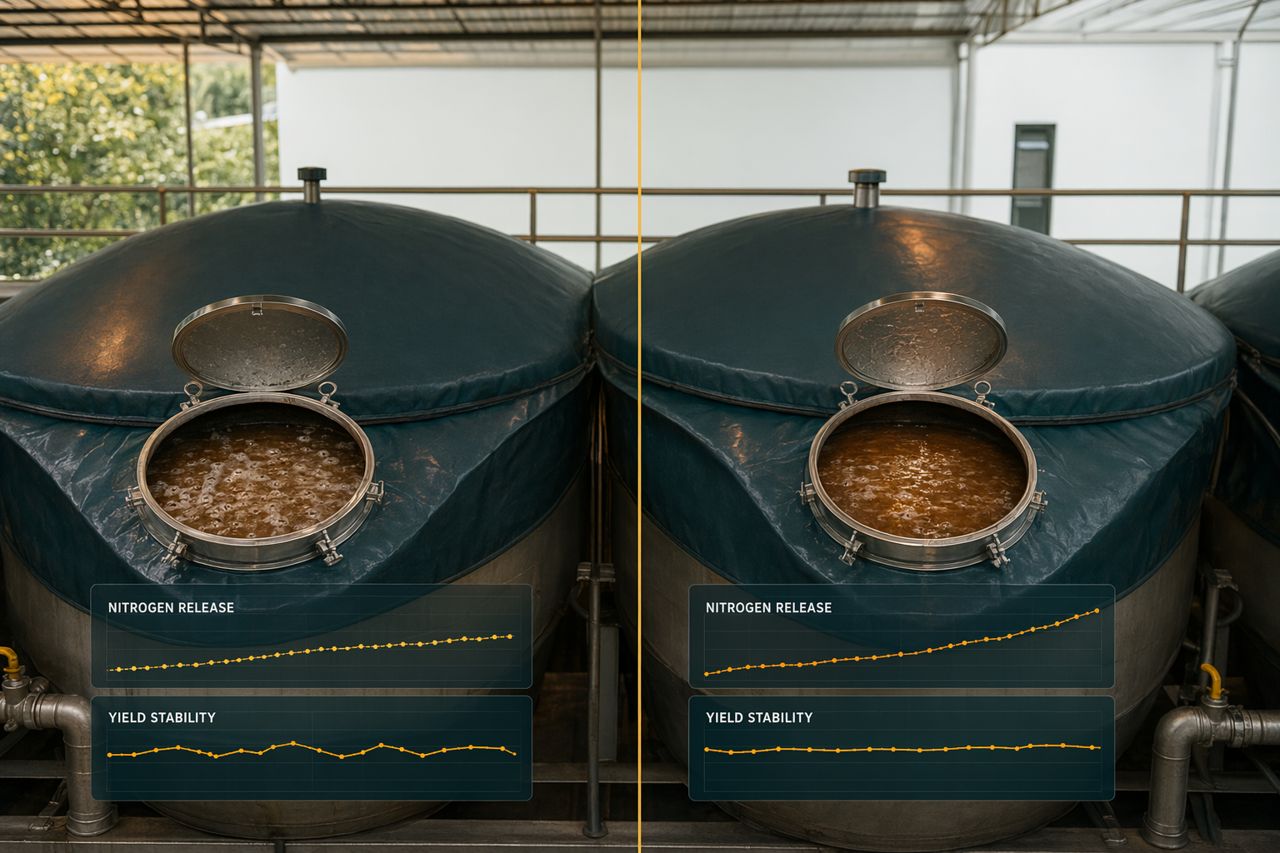
Fermentation managers need predictable extraction across tank lots, not one impressive bench result. SaltPulse helps evaluate protease behavior against your raw material mix, salt profile, hold time, and desired soluble nitrogen curve.
High brine conditions are central to fish sauce identity. SaltPulse prioritizes protease candidates that remain practical under saline factory conditions, helping reduce the gap between lab optimism and tank reality.
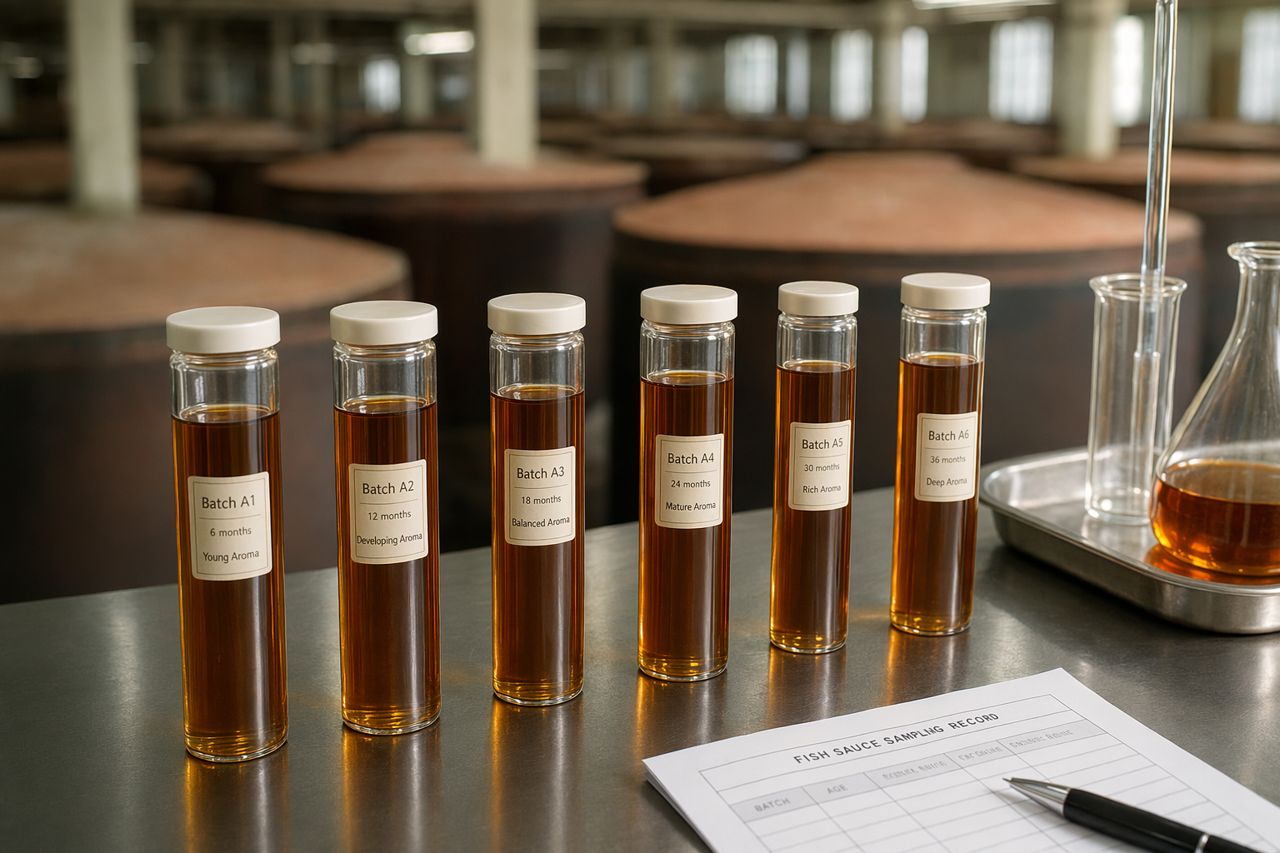
Protein breakdown affects savory depth, sweetness perception, and mature amber aroma. The goal is not aggressive digestion at any cost. The goal is controlled hydrolysis that supports the maturation signature your customers recognize.
Many plants look for time savings, but not at the expense of balance. SaltPulse works with teams to identify where protease can improve early extraction, stabilize production planning, or support blending flexibility while respecting the aged profile of traditional fish sauce.
A protease that performs in a beaker may not behave the same in a large tank with stratification, temperature variation, and mixed raw material quality. SaltPulse keeps evaluation tied to production handling, addition timing, mixing access, brine behavior, filtration load, and finished sauce targets.
| Buyer consideration | Generic protease approach | SaltPulse production-minded approach |
|---|---|---|
| Brine compatibility | Often screened in mild conditions | Reviewed against high-salt fermentation realities |
| Nitrogen release | May emphasize speed only | Targets steady release matched to maturation goals |
| Aroma impact | Risk of sharp or unbalanced hydrolysis | Evaluated for savory depth, amber maturity, and clean finish |
| Scale-up risk | Trial success may not transfer cleanly | Considers tank size, mixing, contact time, and raw material variability |
| Process fit | Product-first recommendation | Process-first selection based on your plant constraints |
| Supplier support | Commodity transaction | Technical discussion for fermentation managers and QA teams |
SaltPulse can help evaluate protease use in several practical production windows:
The best insertion point depends on your raw fish, salt ratio, tank handling, fermentation age targets, and finished sauce specification.
You may be ready for a structured protease comparison if your factory is seeing:
SaltPulse does not begin with a generic catalog answer. We begin with your fermentation reality.
Useful information includes:
From there, we can discuss suitable protease direction, trial structure, and quote requirements.
SaltPulse respects fish sauce as a slow-crafted ingredient, not a shortcut product. Enzymes should serve the fermentation manager, not flatten the sauce into a generic savory liquid. Our role is to help you improve control while preserving the depth, salinity, and mature amber character that define your brand.
That is why our conversations focus on production outcomes: steadier batch performance, cleaner hydrolysis windows, more usable nitrogen release, and confidence when trials move into factory tanks.
If you are looking for an enzyme supplier for fish sauce fermentation that understands both industrial control and the patience of traditional sauce making, SaltPulse Bioworks is ready to help.
Tell us about your raw material, salt conditions, tank size, target maturation time, and the production issue you want to solve. We will respond with a practical protease recommendation path and commercial quote details.
Tell us your application and volume — we reply with pricing and lead time.