Papain and Neutral Protease in Fish Sauce Hydrolysis
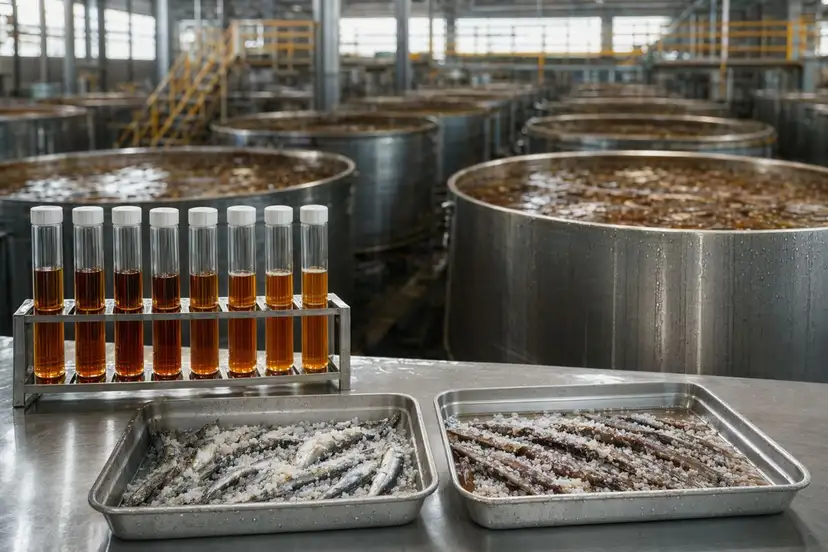
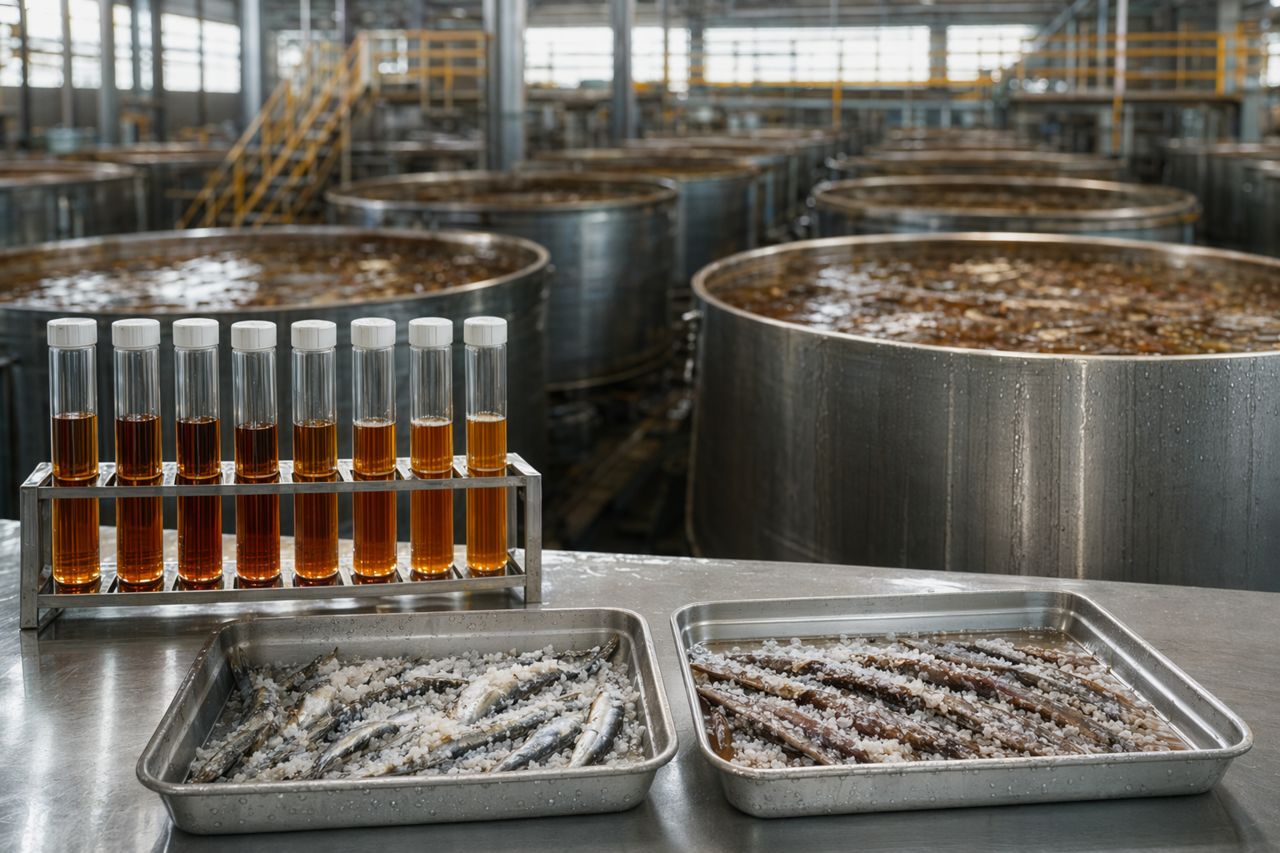
Fish sauce is not a shortcut product. It is built through salt, time, protein breakdown, aroma formation, and the judgment of experienced fermentation teams. Enzymes should support that craft, not flatten it.
SaltPulse Bioworks helps fish sauce factories evaluate papain, neutral protease, and protease-led programs for more predictable nitrogen release, cleaner maturation curves, and stronger batch-to-batch control in high-salt anchovy and mixed fish fermentations.
If you are comparing enzyme options for a production trial, our role is practical: help you select the right protease strategy, define a plant-ready validation plan, and supply consistent enzyme materials for industrial use.
Request a quote
Which protease approach fits your fish sauce process?
Papain and neutral protease can both support fish protein hydrolysis, but they do not behave the same in a salted fermentation environment. The best choice depends on raw material, salting practice, temperature profile, target nitrogen release, aroma direction, and whether the enzyme is used early, mid-process, or as part of a controlled pre-hydrolysis step.
As an enzyme supplier for fish sauce fermentation, SaltPulse Bioworks focuses on production fit rather than catalog selection. The enzyme must work with your brine strength, tank schedule, sensory targets, and downstream clarification requirements.
Papain in fish sauce hydrolysis
Papain is often considered when factories want broad protein breakdown and a more aggressive push toward soluble peptides and amino nitrogen. It can be useful where raw fish proteins need an early hydrolysis assist before long maturation continues under salt.
Where papain can help
- Faster initial protein softening and solubilization
- Support for nitrogen release during early hydrolysis stages
- Useful contribution in anchovy, sardine, and mixed fish substrates
- Potential to improve extractable liquor from dense protein mass
- Practical option when the process can manage enzyme contact time carefully
Production considerations
Papain can be powerful, but more breakdown is not always better. Overextension may shift peptide balance, mouthfeel, or aroma development away from the house style. Fermentation managers should validate papain against sensory maturity, salt phase behavior, filtration load, and final umami profile.
Papain is usually strongest when the factory wants a defined hydrolysis push, not an uncontrolled acceleration of the entire maturation identity.
Neutral protease in fish sauce hydrolysis
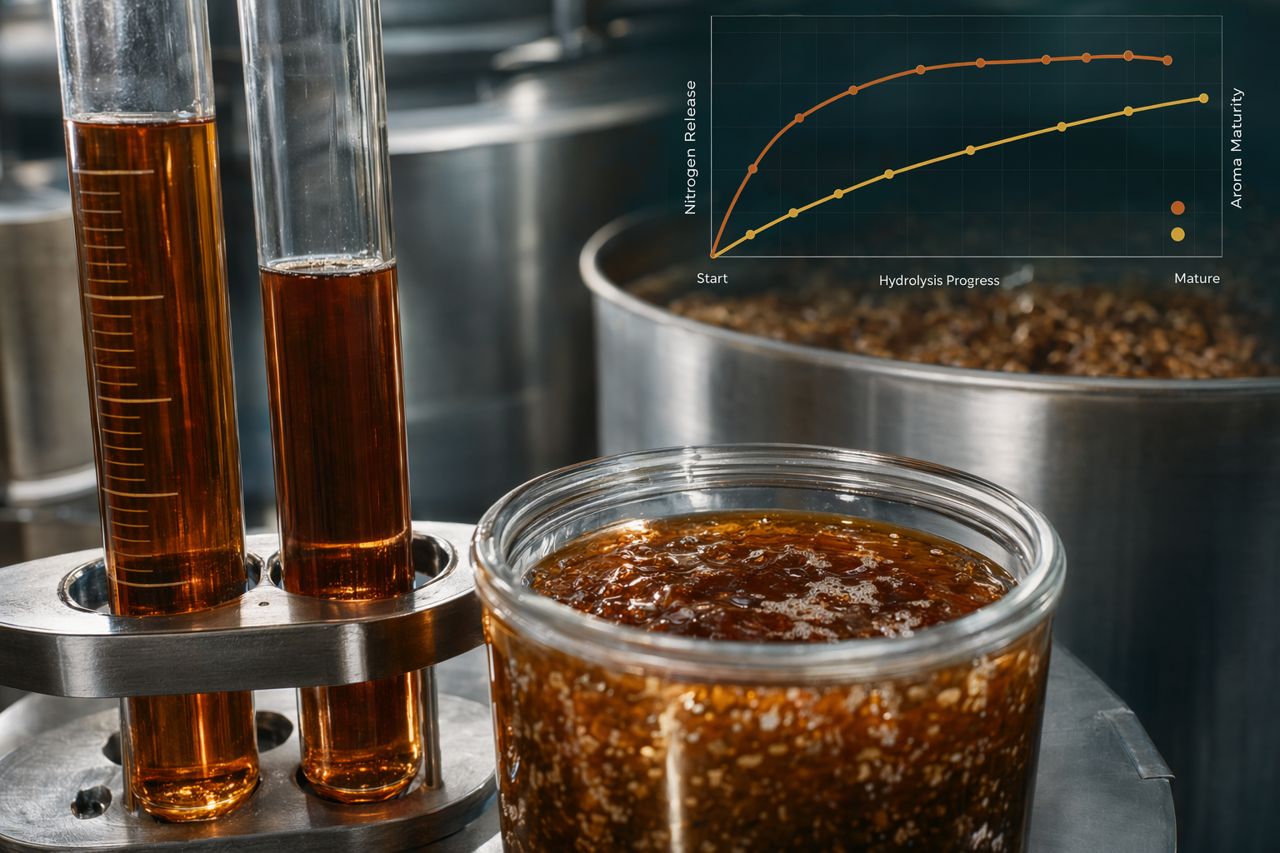
Neutral protease is often selected for a more measured hydrolysis profile. It can support peptide formation and nitrogen release while preserving a controlled maturation path, especially when the factory wants consistency without pushing harsh or overly broken-down notes.
Where neutral protease can help
- Balanced protein hydrolysis with controlled peptide development
- Improved consistency across variable raw fish lots
- Support for aroma maturation without excessive breakdown pressure
- Good fit for factories protecting a traditional sensory signature
- Useful in protease-led systems where stability and repeatability matter
Production considerations
Neutral protease is not simply a gentler substitute for papain. Its value is process control. It may be the better choice when the plant needs predictable maturation behavior, stable liquor quality, and fewer surprises during long tank aging.
For many factories, neutral protease becomes the backbone of a controlled fish sauce enzyme program, especially when paired with careful salting, temperature management, and defined sampling checkpoints.
Papain vs neutral protease: production comparison
| Decision point |
Papain |
Neutral protease |
| Primary production role |
Strong hydrolysis push |
Controlled, balanced hydrolysis |
| Best fit |
Early protein breakdown, yield support, dense raw material |
Batch consistency, aroma protection, stable maturation |
| Nitrogen release profile |
Can accelerate soluble nitrogen formation |
More measured release curve |
| Sensory risk if overused |
Possible over-softening, bitter or unbalanced peptide notes |
Lower risk when validated correctly, but still process-dependent |
| Salted fermentation fit |
Requires careful validation under plant brine conditions |
Often preferred for controlled high-salt maturation programs |
| Buyer priority |
More rapid extraction and protein opening |
Reliability, repeatability, house-style protection |
When a protease-led approach is stronger than choosing one enzyme
The most reliable answer is not always papain or neutral protease alone. Many fish sauce factories benefit from a protease-led approach: a defined enzyme strategy designed around raw material condition, salt addition, hydrolysis timing, target nitrogen release, and sensory maturity.
A protease-led approach may include:
- One primary protease for the main hydrolysis objective
- A staged application plan to avoid over-hydrolysis
- Trial batches comparing papain, neutral protease, and controlled blends
- Process checkpoints for soluble nitrogen, aroma maturity, clarity, and yield
- Scale-up guidance from bench trial to production tank
This is where supplier discipline matters. SaltPulse Bioworks does not treat fish sauce as a generic protein hydrolysis project. We build enzyme recommendations around the realities of salted fermentation, tank residence time, craft aroma, and factory economics.
What production managers should evaluate before choosing
Before selecting papain, neutral protease, or a combined protease program, confirm these process variables:
Raw material profile
Species, freshness, fat level, protein density, fish-to-salt ratio, and seasonal variation can all affect hydrolysis behavior. A protease that performs well on one anchovy lot may need adjustment for another.
Salt environment
High salinity protects the fermentation but also changes enzyme behavior. The right enzyme program must tolerate the plant’s brine reality, not just ideal laboratory conditions.
Maturation target
Some factories want earlier nitrogen release while still finishing through traditional aging. Others want more consistent aroma development across tanks. The enzyme choice should serve the target product, not force a new product identity.
Clarification and pressing
Hydrolysis changes liquor release, solids structure, and filtration burden. A successful enzyme program should improve usable output without creating downstream instability.
Sensory control
Fish sauce quality is judged by aroma, umami depth, salinity balance, amber color, and finish. Enzyme selection must be validated against sensory panels and customer specifications, not only speed.
SaltPulse Bioworks support for fish sauce factories
SaltPulse Bioworks supplies industrial enzyme solutions for fish sauce fermentation managers who need practical, plant-scale reliability. We help compare papain, neutral protease, and protease-led options using your process goals and production constraints.
Our support can include:
- Enzyme selection for salted fish hydrolysis
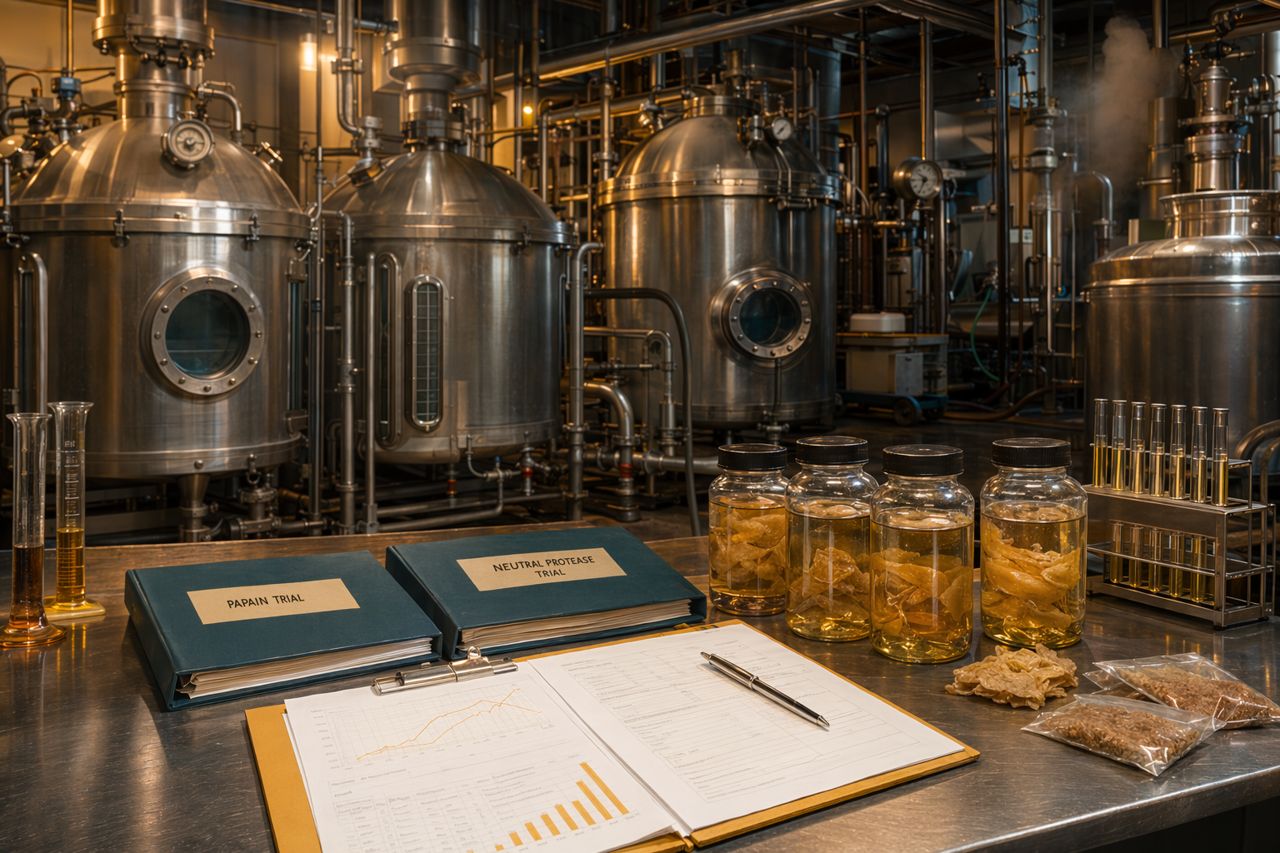
- Trial design for papain and neutral protease comparison
- Scale-up planning for factory tanks
- Guidance on addition point, contact time, and process controls
- Batch consistency support across seasonal raw material changes
- Documentation for procurement, QA, and production teams
If you are looking for an enzyme supplier for fish sauce fermentation with a production-minded approach, we can help you evaluate the right protease path before you commit plant capacity.
Request a quote for papain or neutral protease trials
Tell us your fish species, salting practice, tank size, maturation target, and whether your priority is nitrogen release, aroma consistency, maturation time, yield, or all of the above. SaltPulse Bioworks will respond with a practical enzyme recommendation and quote for your factory trial.
Request a quote