How Fish Sauce Factories Reduce Tank Residence Time Without Losing Traditional Character
Long maturation is part of fish sauce identity. It gives time for protein breakdown, aroma development, brine integration, and the deep amber profile that buyers recognize. But for plant managers, long tank residence time also ties up capital, floor space, and blending flexibility.
The practical question is not whether fish sauce should be rushed. It should not. The question is how a factory can reduce unnecessary residence time while protecting the traditional character of the finished sauce.
SaltPulse Bioworks supports this problem as an enzyme supplier for fish sauce fermentation, with enzyme solutions designed for high-salt protein hydrolysis, smoother nitrogen release, and more predictable maturation curves at factory scale.
Residence time is usually a control problem, not just a calendar problem
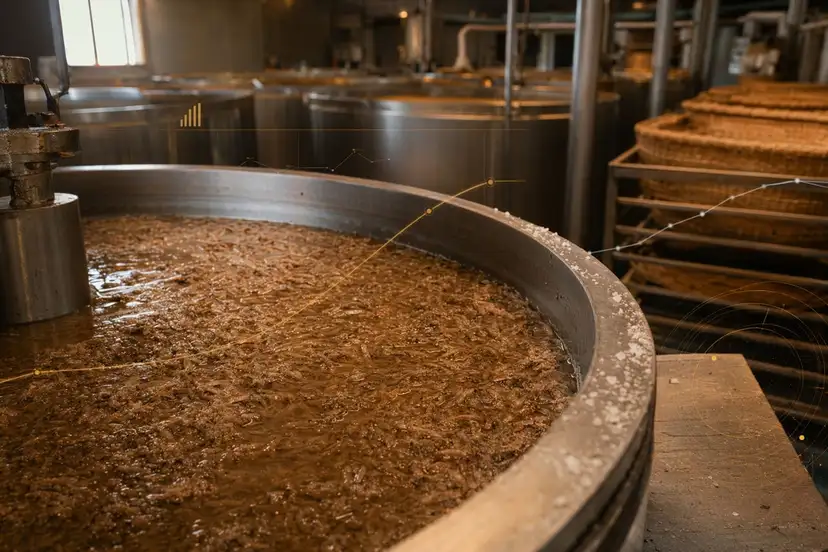
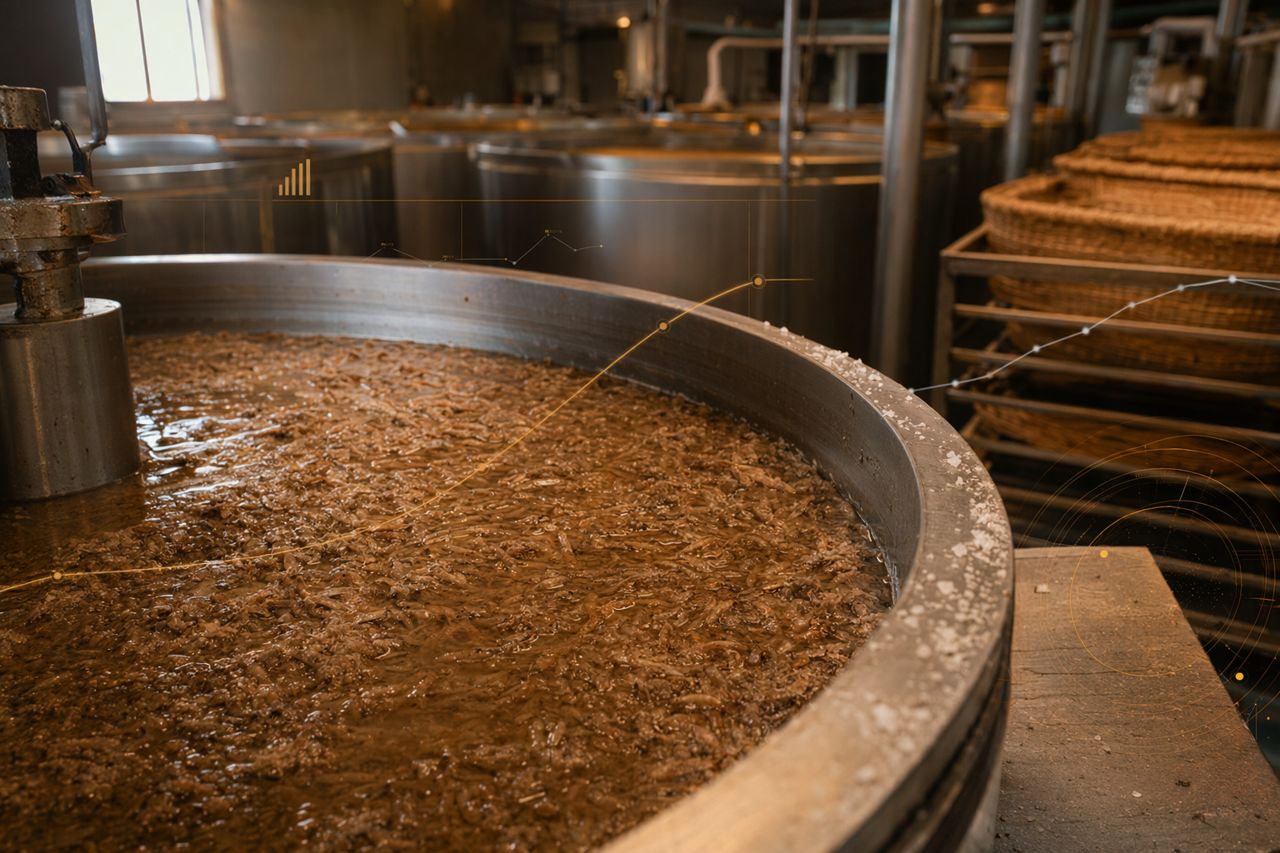
Two tanks filled on the same day can mature differently. The difference may come from raw fish freshness, species mix, particle size, salt distribution, temperature history, brine circulation, endogenous enzyme strength, and sediment behavior.
When these variables are left unmanaged, residence time becomes a safety margin. Factories hold tanks longer because they cannot confidently predict when soluble nitrogen, aroma maturity, and liquid yield will reach specification.
Controlled enzyme use can reduce that uncertainty. The objective is not to replace traditional fermentation. The objective is to support the natural breakdown pathway so each tank moves through maturation with fewer stalls and less variation.
What slows fish sauce tanks down?
1. Variable raw material quality
Anchovy size, seasonal protein content, handling time, fat level, and tissue integrity all affect hydrolysis. A factory may see strong breakdown in one intake window and sluggish release in the next.
A production enzyme strategy helps buffer this variability by giving the batch a more consistent hydrolysis baseline, especially when raw material supply changes across seasons or landing ports.
2. Uneven salt penetration
Salt protects the fermentation, but uneven salt contact can create pockets where breakdown is delayed. Large fish pieces, compacted solids, or inconsistent mixing can slow brine extraction and leave valuable protein trapped in the mash.
Enzymes selected for salt tolerance can support protein breakdown under brined conditions, helping factories improve extractability without pushing the process outside its traditional salinity logic.
3. Slow nitrogen release
For many fish sauce plants, maturation progress is tracked through soluble nitrogen development and sensory confirmation. If nitrogen release is slow, tanks remain occupied even when the batch is otherwise stable.
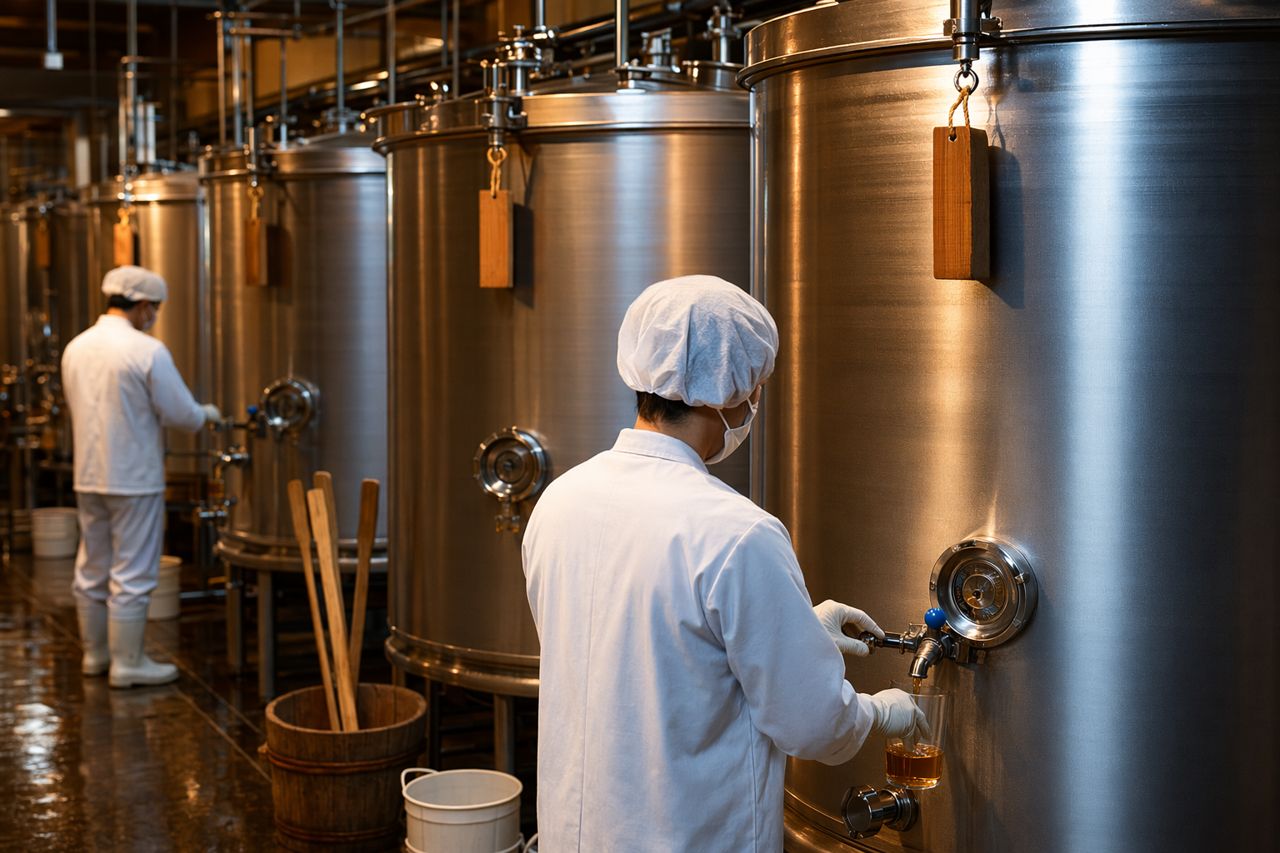
Targeted proteolytic support can help increase the rate and consistency of protein solubilization, giving fermentation managers better control over when a tank is ready for draw-off, blending, or continued aging.
4. Aroma development that lags behind hydrolysis
Residence time cannot be reduced by nitrogen release alone. A technically mature sauce must still taste right: clean umami, rounded salt perception, marine depth, and no harsh or raw notes.
The enzyme program must therefore be calibrated for flavor trajectory, not only extraction. Over-aggressive hydrolysis can create imbalance. The best approach supports gradual release while preserving the factory’s house style.
The production target: shorter holds with stable character
A successful residence-time program should deliver measurable operational value without flattening traditional identity. For a fish sauce factory, that usually means:
- More predictable soluble nitrogen development between tanks
- Improved liquid yield from the same raw material base
- Fewer tanks held beyond the planned maturation window
- Better blending confidence across batch ages
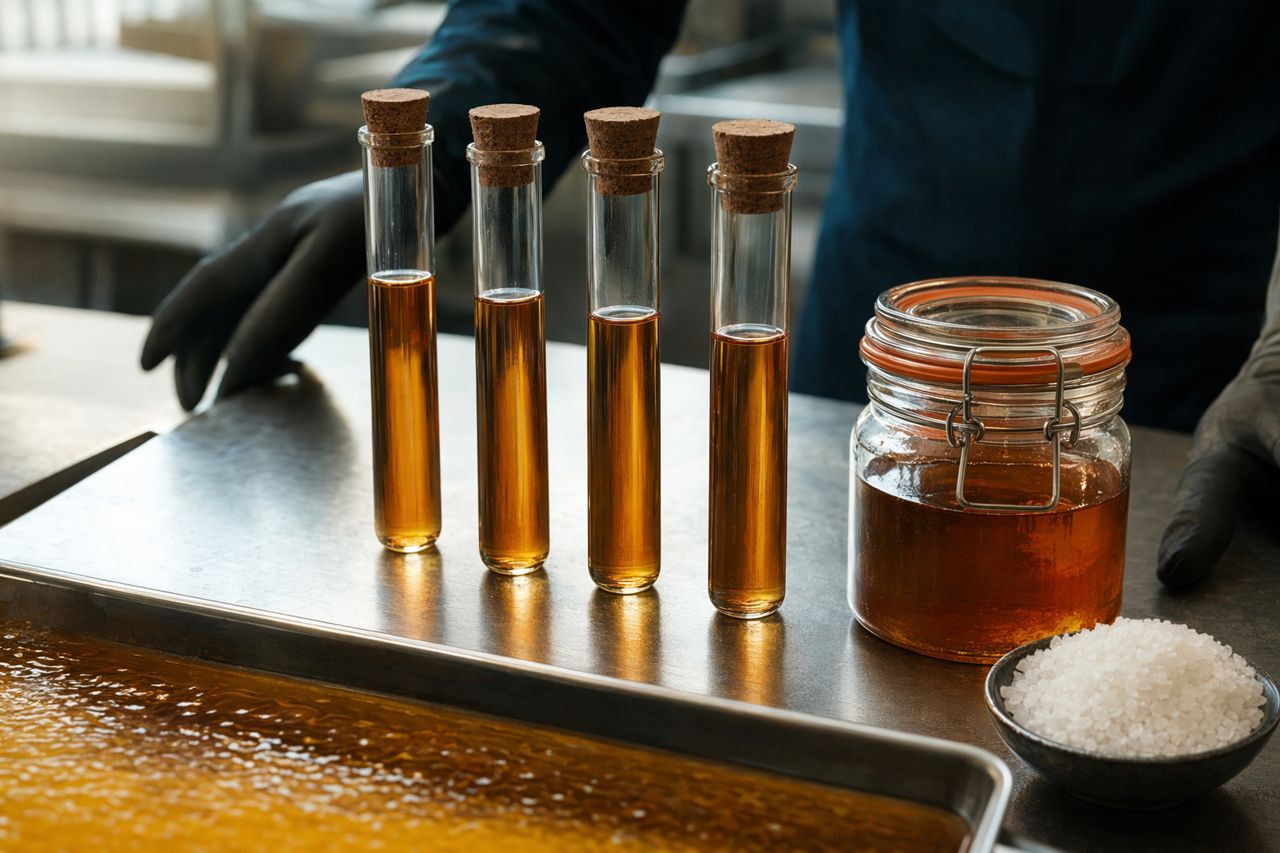
- More consistent amber color and aroma maturity
- Lower risk of raw, harsh, or unbalanced flavor notes
- Improved production planning when fish supply is seasonal
This is where supplier selection matters. An enzyme supplier for fish sauce fermentation must understand high-salt fermentation, marine raw material variability, and the commercial pressure on tank utilization.
How to apply controlled hydrolysis without losing heritage character
Start with the house profile
Before any process change, define the sensory target. What is the expected aroma at first draw? How much aged note should remain after blending? What level of salt bite is acceptable? Which batches represent the factory’s best traditional character?
Enzyme selection should be guided by that house profile. The goal is not a generic high-nitrogen liquid. The goal is a sauce that still belongs to the brand.
Map the current residence-time curve
Factories should compare several recent production cycles and document where tanks diverge. Useful checkpoints include raw material intake condition, salt addition uniformity, brine appearance, liquid recovery, color development, aroma notes, and final blending behavior.
The strongest opportunities are often found in stalled mid-maturation tanks or in seasonal batches that routinely need extra holding time.
Use salt-tolerant enzyme systems
Fish sauce fermentation is not a low-salt environment. Enzymes must remain useful in brined mash and should be selected for compatibility with the factory’s salt strategy.
SaltPulse Bioworks focuses on enzyme solutions that support protein breakdown in saline fermentation conditions while respecting the slow-crafted identity of traditional fish sauce.
Avoid overcorrection
More enzyme is not automatically better. Excessive or poorly matched hydrolysis can make flavor development harder to manage. The right program is controlled, batch-aware, and integrated with the plant’s existing fermentation practice.
For production teams, the best outcome is a more reliable maturation curve, not a forced shortcut.
Plant-scale reliability: what fermentation managers should ask
When evaluating an enzyme partner, ask questions that relate directly to factory performance:
- Will the enzyme system remain effective under the plant’s normal salt conditions?
- How does it handle seasonal variation in fish size, freshness, and protein composition?
- Can the supplier support staged trials from pilot mash to production tanks?
- How will the program protect aroma maturity and amber color development?
- What process records should be compared before and after implementation?
- How will the supplier help define a practical draw-off or blending decision point?
A credible answer should connect enzyme behavior to production outcomes: tank turnover, batch consistency, liquid yield, aroma control, and fewer surprises in blending.
Where residence-time reduction creates business value
Reducing tank residence time is not only a technical improvement. It changes plant economics.
A factory that can move more tanks through a controlled maturation window may improve annual throughput without building new tank capacity. More predictable maturation also supports sales planning, export commitments, and private-label consistency.
The value is especially clear when raw fish availability is seasonal. Better process control allows the plant to manage high-volume landing periods with less uncertainty about when those tanks will be ready for downstream handling.
A careful path forward
For fish sauce, speed is only valuable when character remains intact. The right enzyme program should respect salt, time, fish protein, and the sensory memory of the factory’s customers.
SaltPulse Bioworks works with fish sauce producers who want controlled hydrolysis, stable nitrogen release, and reliable maturation without turning a heritage process into a commodity shortcut.
If your plant is reviewing tank residence time, raw material variability, or maturation consistency, use the on-site form to request a quote. Share your process goals, salt conditions, raw material profile, and target sauce character, and our team will help define a practical enzyme supply approach for your factory.
Request a quote