Odor Control and Worker Safety in Seafood Fermentation Areas
Practical facility guidance for fish sauce factories managing ventilation, housekeeping, PPE, odor mitigation, and batch stability in high-salt protein fermentation areas.
Request pricing Practical facility guidance for fish sauce factories managing ventilation, housekeeping, PPE, odor mitigation, and batch stability in high-salt protein fermentation areas.
Request pricingFish sauce production is built on time, salt, protein breakdown, and careful sensory judgment. The same conditions that create deep amber umami can also concentrate strong aromas, wet-floor hazards, corrosion exposure, and housekeeping pressure around fermentation zones.
For fermentation managers, odor control is not only a community relations issue. It affects worker comfort, cleaning burden, maintenance planning, visitor perception, and batch discipline. A plant that controls air movement, residue, brine handling, and maturation variability is easier to operate at scale.
SaltPulse Bioworks supports fish sauce factories with enzyme programs designed for salt-heavy fermentation environments, while respecting the craft logic of traditional maturation. This article focuses on practical facility management: ventilation, housekeeping, PPE, odor reduction, and the process habits that keep high-protein seafood fermentation areas safer and more predictable.
Strong seafood fermentation odors often become most difficult when the process loses balance. Common contributors include:
Odor management should not be treated as a deodorizing project alone. It is a production-control project. The cleaner and more predictable the material flow, the easier it becomes to manage aroma at the source.
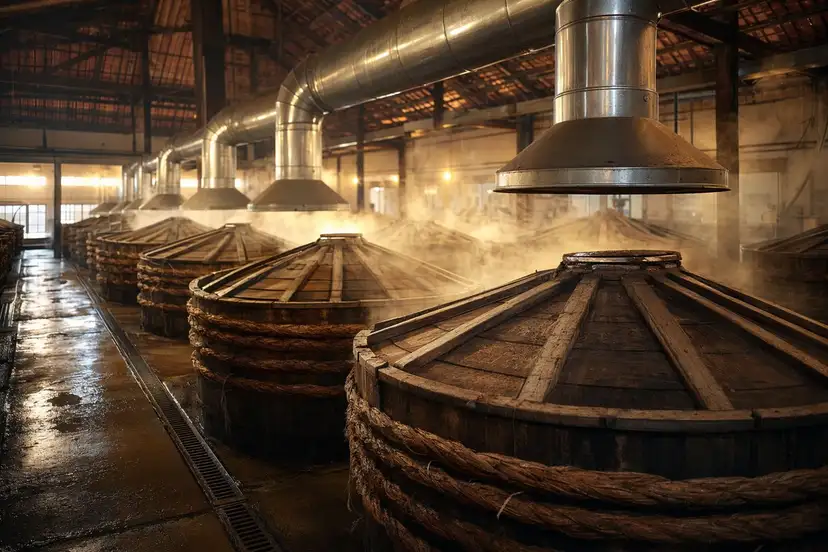
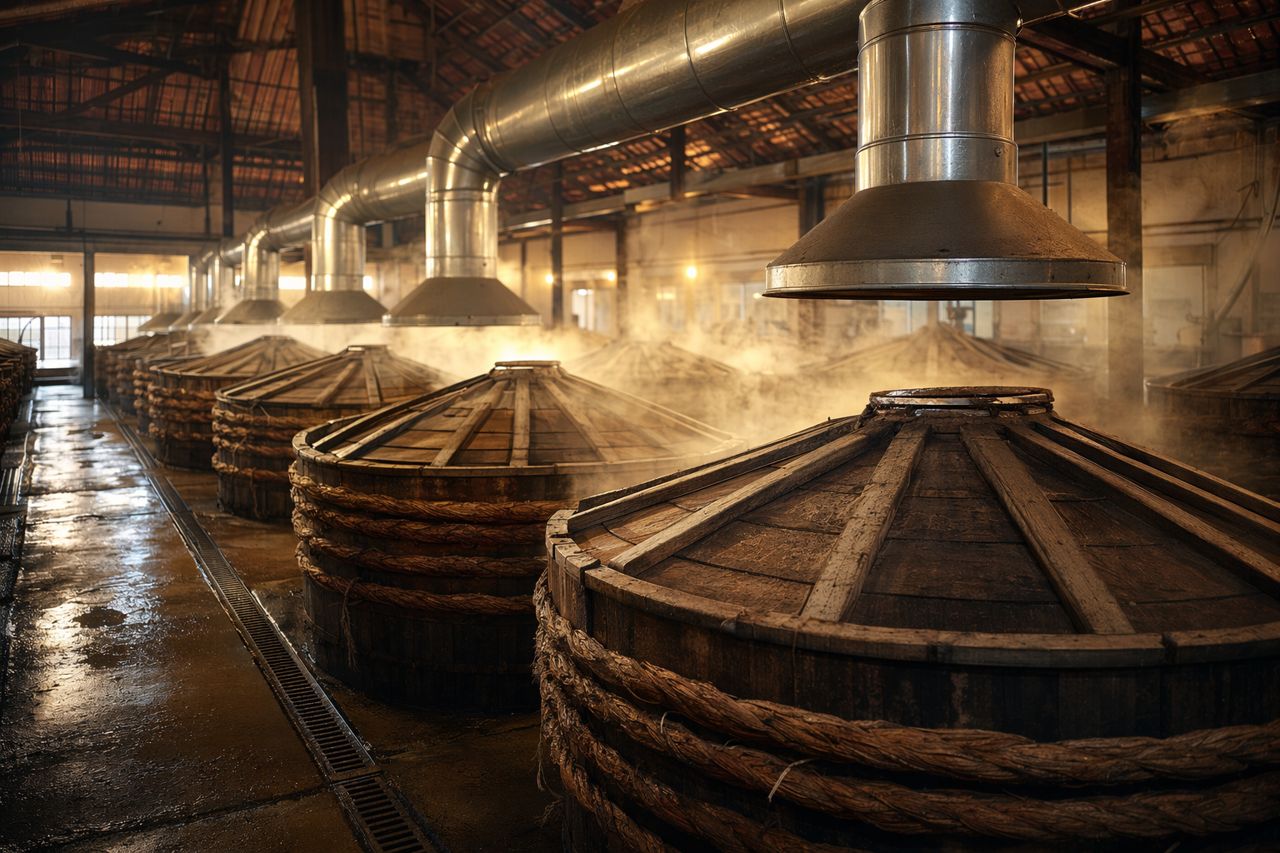
In fish sauce factories, ventilation should be designed around where volatile aromas are generated, not simply where air is easiest to exhaust.
Focus ventilation review on:
Air should generally move from cleaner zones toward higher-odor production zones, then toward controlled exhaust. Avoid pushing vat-room air into corridors, offices, ingredient staging, or finished-goods areas.
A production-minded ventilation review should ask:
Ventilation is not just air volume. It is source capture, pressure control, corrosion planning, and worker comfort.
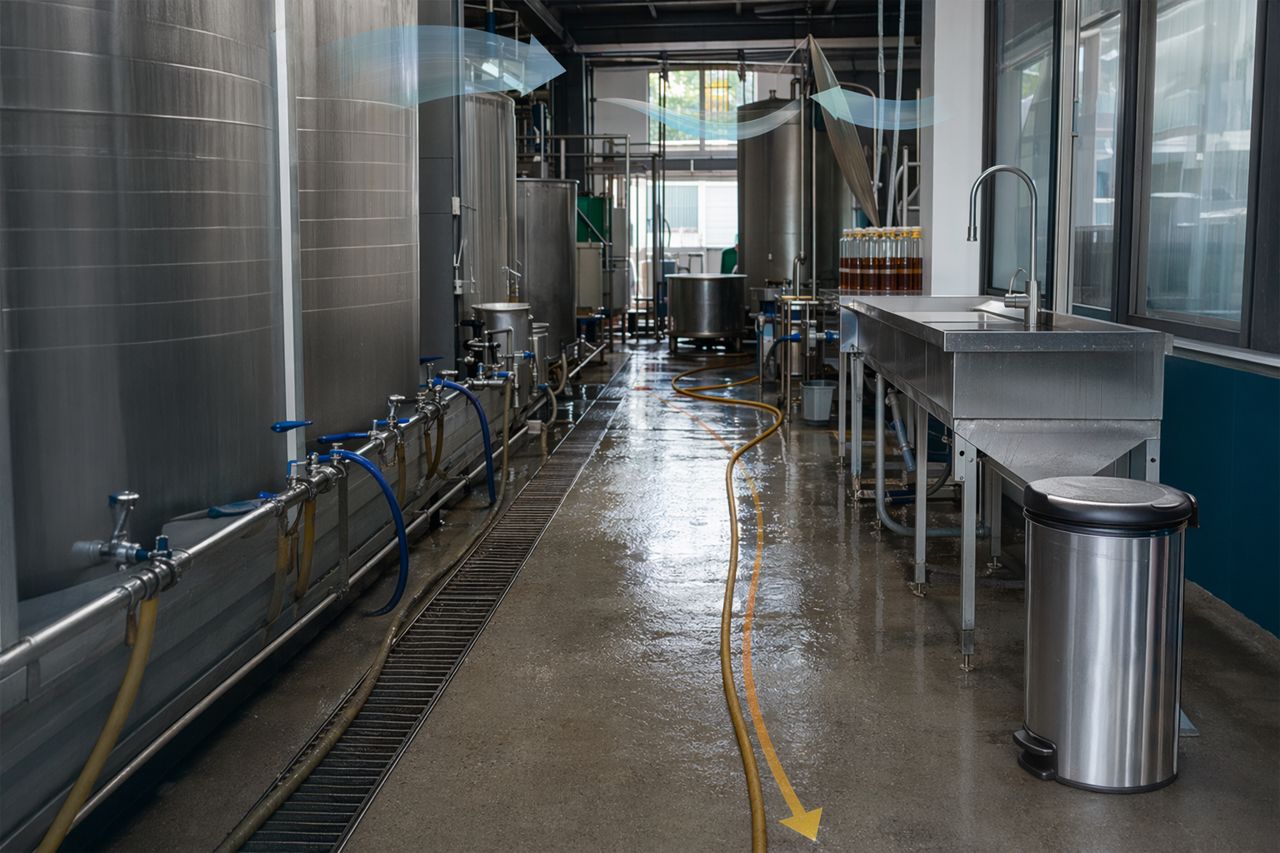
High-salt seafood residue can be deceptive. It may appear dry or stable, but it can continue to hold strong aroma, attract moisture, and create slippery surfaces when exposed to brine or wash water.
The goal is not cosmetic cleanliness. The goal is to keep protein, salt, and moisture from forming persistent odor reservoirs.
Worker safety in fish sauce production requires PPE that accounts for brine, wet floors, corrosive salt exposure, splashes, and the physical realities of tank-side work.
PPE should be paired with training. Workers need to understand when hazards change: opening covered vessels, entering poorly ventilated areas, cleaning drains, moving hoses, or handling concentrated brine.
Some fish sauce production areas can create elevated risk because air movement is limited, surfaces are wet, and workers may be near vats, pits, sumps, or low-lying spaces.
Facility teams should clearly define:
Never rely on odor alone to judge whether an area is safe. Strong smell, weak smell, and no smell can all be misleading in industrial environments.
Fish sauce aroma is not a defect. It is part of the product’s identity. The management goal is to prevent uncontrolled odor release while preserving the intended sensory profile of the sauce.
Useful mitigation layers include:
The best odor programs are layered. No single fan, chemical, or cleaning step can compensate for poor material flow.
An enzyme program is not a replacement for ventilation, PPE, or sanitation. However, process consistency can influence odor risk. When protein breakdown is more predictable, fermentation managers can make better decisions about maturation timing, blending windows, and batch movement.
As an enzyme supplier for fish sauce fermentation, SaltPulse Bioworks focuses on plant-scale reliability: salt tolerance, controlled nitrogen release, aroma development, and compatibility with established craft practices. The objective is not to erase traditional character. The objective is to help teams reduce avoidable variability that can lead to rework, delayed turnover, or distressed batches.
For B2B buyers, the value is practical:
Use this checklist during a walk-through with production, maintenance, sanitation, and safety leads.
Traditional fish sauce production depends on patience. Industrial fish sauce production depends on patience plus repeatability. Odor control and worker safety are part of that repeatability.
When air handling, cleaning, PPE, restricted access, and fermentation control are aligned, the plant becomes easier to manage. Workers move with more confidence. Maintenance teams see fewer surprises. Fermentation managers gain better visibility into batch behavior. The final product remains true to its amber, saline, slow-crafted identity.
If your facility is reviewing maturation time, batch consistency, nitrogen release, salt tolerance, or odor-related process risk, SaltPulse Bioworks can help evaluate the enzyme side of the equation.
Use the on-site request a quote form to share your production context, target sauce profile, salt conditions, batch scale, and current operational concerns. Our team will respond with a practical technical path for your fish sauce fermentation program.
Tell us your application and volume — we reply with pricing and lead time.